Blog
Is Utility Locating Worth the Cost Before Excavation?
The Cost You See vs. the Cost You Don’t
When planning an excavation project, most people focus on visible expenses—materials, labor, equipment. But there’s one cost that often gets questioned before the first shovel hits the ground: utility locating.
At first glance, it can feel like an extra step. Something optional. Something you might skip to save money.
But in Montana, where underground utility layouts can vary widely from property to property, the real question isn’t how much utility locating costs—it’s what it actually protects you from.
What Utility Locating Really Prevents
Utility locating isn’t just about marking lines on the ground. It’s about avoiding problems that can quickly escalate once digging begins.
Before excavation, there’s no clear visual indicator of what’s below the surface. Electrical lines, water systems, and communication cables can all run through a property without obvious signs.
When those lines are hit, the consequences can include:
Immediate repair costs
Project delays that disrupt timelines
Safety hazards for workers and property owners
Potential liability for damages
In many cases, the financial impact of a single mistake far exceeds the cost of locating utilities beforehand.
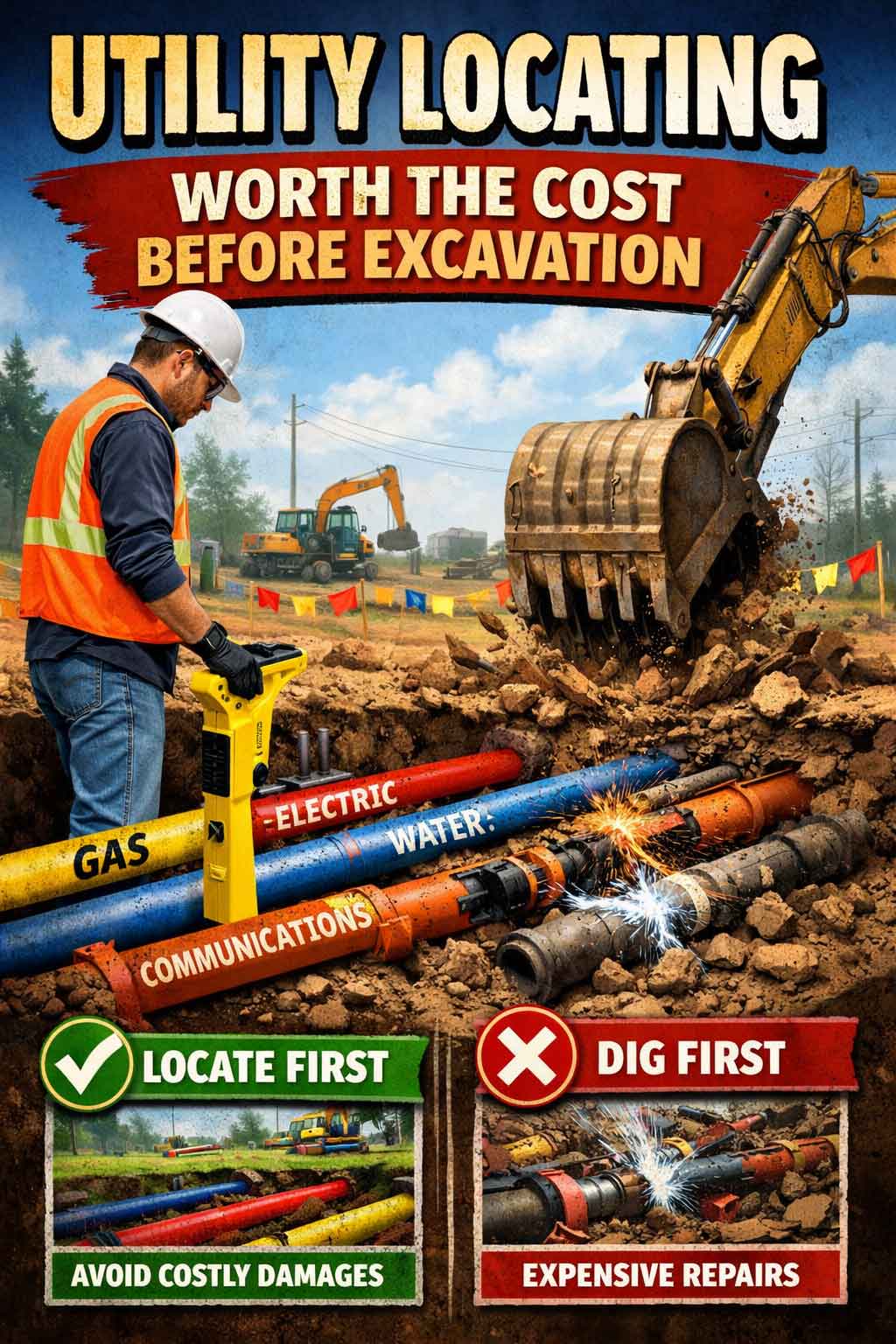
A Simple Cost vs. Risk Breakdown
Instead of looking at utility locating as a standalone expense, it helps to compare two scenarios.
Scenario 1: Skipping Utility Locating
You begin digging without confirming what’s underground.
You risk damaging hidden utilities
Repairs may be urgent and costly
Work may stop unexpectedly
Scenario 2: Using Utility Locating First
You identify underground lines before excavation begins.
You know exactly where to dig safely
You reduce the risk of damage
Your project moves forward with fewer interruptions
The difference between these two scenarios isn’t just cost—it’s control.
When Utility Locating Becomes Especially Valuable
Not every project carries the same level of risk, but there are situations where utility locating becomes even more important.
Older Properties in Montana
Many properties have undergone changes over time—additions, upgrades, or repairs. These modifications aren’t always documented clearly, which means underground layouts can be unpredictable.
Rural and Large Properties
In areas outside dense urban zones, private utility lines are more common. These lines are often not included in public marking systems, making private locating essential.
Projects Involving Deep Digging
The deeper the excavation, the greater the chance of encountering critical infrastructure. Deeper work increases both the risk and the potential cost of mistakes.
Tight Project Timelines
Unexpected delays can be just as costly as repairs. If your project has strict deadlines, avoiding disruptions becomes a priority.
Why Montana Conditions Make It More Relevant
Excavation in Montana comes with unique challenges that can increase the importance of utility locating.
Variable Soil Conditions
From compact ground to rocky areas, soil differences can affect both digging and detection.
Seasonal Changes
Frozen ground during colder months can make both excavation and emergency repairs more difficult and expensive.
Mixed Infrastructure
Properties may have a combination of older and newer systems, making it harder to predict what lies beneath the surface.
These factors make it less practical to rely on assumptions and more important to rely on accurate locating.
The Hidden Costs of Skipping Utility Locating
The biggest misconception about utility locating is that skipping it saves money.
In reality, it often shifts the cost somewhere else—usually to a place that’s far more expensive.
Here’s where those hidden costs show up:
Emergency repair services
Replacement of damaged utility lines
Equipment downtime while work is paused
Additional labor to fix and rework areas
What starts as a small upfront saving can quickly turn into a larger, unexpected expense.
How Utility Locating Supports Better Project Planning
Utility locating doesn’t just prevent damage—it improves how a project is executed.
With clear markings in place, you can:
Plan excavation routes more efficiently
Allocate time and resources more accurately
Reduce guesswork during construction
This level of clarity is especially useful for contractors working on multiple projects or tight schedules in areas like Billings.
Making the Decision: Is It Worth It?
If you’re weighing the cost, the decision comes down to one key question:
Are you willing to risk the unknown?
If the answer is no, then utility locating becomes less of an option and more of a necessary step.
For most excavation projects—whether small residential work or larger commercial jobs—the cost of locating utilities is minor compared to the risks it helps eliminate.
FAQs About Utility Locating and Cost
Is utility locating required before digging?
Public utilities must typically be marked, but private utility locating is often necessary to fully protect your property.
Does utility locating guarantee no damage?
It significantly reduces risk, but safe digging practices should still be followed after marking.
Is utility locating worth it for small projects?
Yes. Even minor digging can hit underground lines, making it a worthwhile precaution.
How far in advance should I schedule utility locating?
Scheduling ahead of your project ensures availability and avoids delays.
Can skipping utility locating affect my project timeline?
Yes. Unexpected damage can halt work and create delays that are more costly than the locating itself.
Conclusion
Utility locating is one of those decisions that doesn’t always feel urgent—until it becomes critical.
In Montana, where underground conditions and property layouts can vary, taking the time to identify utilities before excavation isn’t just about safety. It’s about avoiding preventable costs, delays, and complications.
For property owners and contractors preparing to dig, working with experienced professionals like Last Call Locating Inc. offers a practical advantage—giving you the clarity you need to move forward with confidence and keep your project on track from the start.

OUR SERVICES

CONTACT INFORMATION
Phone:
Business Hours:
Mon - Fri: 9:00 AM – 5:00 PM
Sat & Sun: Closed
OUR LOCATION
© 2026 All Rights Reserved | Last Call Locating Inc. | Privacy Policy
Website Done By: LocalEyes