
Blog
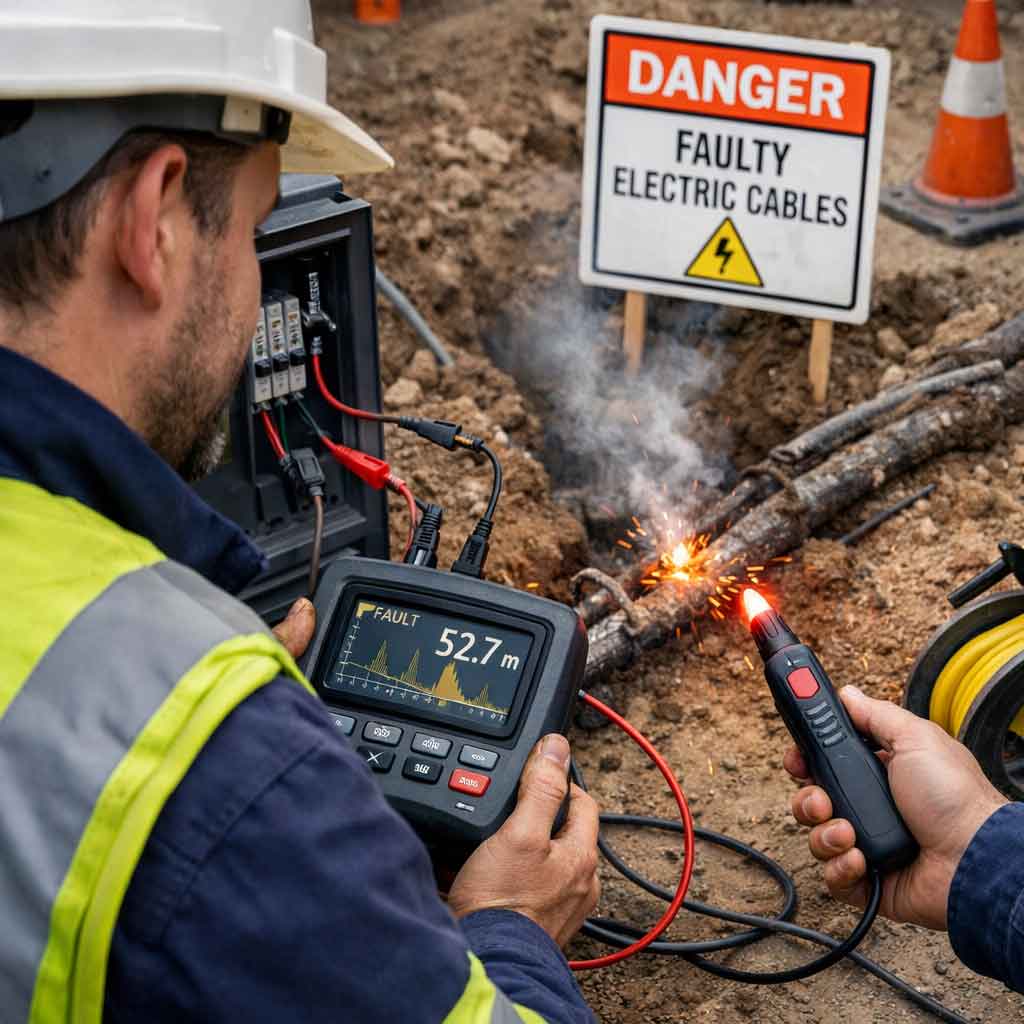
What Impacts the Cost of Locating Faulty Electric Lines?
Why Fault Location Isn’t Priced Like Standard Utility Locating
Locating underground utilities is already a specialized service—but finding a faulty electric line takes it a step further.
Unlike standard locating, where the goal is to trace known lines, fault detection focuses on identifying a specific problem point—where a line is damaged, broken, or no longer functioning properly.
That difference is exactly why pricing for fault locating varies more than typical utility locating services. It’s not just about finding where a line runs—it’s about pinpointing where something has gone wrong.
For property owners and contractors in Montana, understanding what drives these costs helps set clearer expectations before starting the process.
What Faulty Electric Line Locating Involves
Before breaking down the cost factors, it helps to understand what the service actually includes.
Fault locating typically involves:
Tracing the path of an electrical line
Identifying signal loss or irregularities
Pinpointing the exact location of damage
Verifying the issue before excavation or repair
This process requires more precision, more time, and more advanced equipment than standard locating—which is why cost is influenced by several specific variables.
The Core Factors That Affect Fault Locating Costs
Fault locating pricing is shaped by a combination of technical difficulty, site conditions, and project scope. Below are the most important elements that influence the final cost.
Type of Electrical Fault
Not all faults are the same, and some are significantly harder to detect.
Common fault types include:
Complete breaks in the line
Partial damage causing inconsistent performance
Short circuits or grounding issues
Clear, severe faults are often easier to locate than subtle or intermittent problems. The more complex the issue, the more time and effort it takes to identify.
Length of the Electrical Line
The longer the line, the more area needs to be tested and analyzed.
A short run between a meter and a structure may be relatively quick to assess. In contrast, longer lines—especially on larger Montana properties—require extended tracing and verification.
Depth and Burial Conditions
Depth plays a major role in detection difficulty.
Shallow lines are easier to test and trace
Deeper lines may weaken signal strength
Buried lines under concrete or asphalt require more effort
In Montana, soil conditions can vary widely, and deeper installations may require additional passes to confirm accuracy.
Ground Conditions and Terrain
The environment directly affects how efficiently a fault can be located.
Some conditions that increase complexity include:
Rocky or compact soil
Uneven terrain
Areas with heavy surface cover
Seasonal factors also matter. Frozen ground, which is common in Montana during colder months, can make both detection and follow-up excavation more challenging.
Accessibility of the Area
Easy access allows for faster setup and smoother operation.
However, obstacles such as:
Limited entry points
Fencing or structures
Landscaping features
can slow down the process and increase the time required to complete the job.
Interference from Other Utilities
Fault locating becomes more complex when multiple underground systems are present.
Nearby utilities can interfere with signals, making it harder to isolate the faulty electric line. This requires additional testing and verification to ensure accuracy.
Equipment and Technology Required
Fault locating often relies on more advanced tools than standard utility locating.
Depending on the situation, technicians may use:
Signal tracing equipment
Fault-finding transmitters
Specialized detection methods for damaged lines
The level of technology required directly affects both the time involved and the overall cost.
Time Required to Isolate the Problem
Unlike standard locating, fault detection doesn’t always follow a predictable timeline.
Some faults can be identified quickly, while others require a process of elimination. The time spent narrowing down the exact location is a major factor in pricing.
Why Fault Locating Costs Can Vary So Much
When you combine all these factors, it becomes clear why there isn’t a fixed price for locating faulty electric lines.
For example:
A short, clearly damaged line in an accessible area may be relatively quick to locate
A long, partially damaged line in rocky or frozen ground may take significantly more time
Each project is unique, and the cost reflects the level of effort required to accurately diagnose the issue.
Montana-Specific Conditions That Influence Pricing
Fault locating in Montana comes with additional considerations that can affect cost.
Rural Property Layouts
Many properties have long private electrical runs with limited documentation, increasing the time needed for tracing.
Mixed Infrastructure
Older and newer systems may overlap, making it harder to isolate faults.
Seasonal Ground Changes
Frozen or compacted soil can slow down both detection and repair planning.
These local factors make experience with Montana properties especially valuable when performing fault locating.
When Fault Locating Is Worth the Cost
Fault locating may seem like a specialized expense, but it becomes highly valuable in the right situations.
When Power Issues Are Unclear
If you’re experiencing electrical problems without a clear cause, locating the fault helps avoid unnecessary digging.
When You Want to Avoid Trial-and-Error Excavation
Digging without knowing the exact problem area can lead to wasted time and additional damage. Fault locating provides precision before excavation begins.
When Repairs Need to Be Targeted
Knowing the exact fault location allows for focused repairs, reducing both labor and material costs.
When Projects Are Time-Sensitive
Identifying the issue quickly helps keep projects on schedule and prevents extended downtime.
How to Prepare for a Fault Locating Service
To get the most accurate estimate and efficient service, it helps to provide clear information upfront.
Describe the Issue
Explain what problems you’re experiencing, such as power loss or inconsistent performance.Share Property Details
Include the size of the area and any known utility layouts.Identify Access Points
Let the technician know about any obstacles or restrictions on-site.Provide Timing Requirements
Indicate whether the issue is urgent or part of a planned project.
This information helps streamline the process and reduces unnecessary delays.
FAQs About Faulty Electric Line Locating Costs
Why is fault locating more expensive than standard locating?
Because it requires identifying a specific problem point, which often involves more time, testing, and advanced equipment.
How long does it take to locate a fault?
It depends on the complexity of the issue. Some faults are found quickly, while others require more detailed investigation.
Can all electrical faults be located underground?
Most can be identified with the right equipment, but accuracy improves with proper site information and conditions.
Is fault locating necessary before repairs?
Yes, it helps pinpoint the exact problem area, reducing unnecessary excavation.
Does ground condition affect the cost?
Yes, factors like soil type, depth, and seasonal conditions can influence both difficulty and pricing.
Conclusion
The cost of locating faulty electric lines depends on more than just the size of the job—it reflects the complexity of finding and diagnosing a hidden problem underground.
From fault type and line length to ground conditions and accessibility, each factor plays a role in how much time and effort the process requires.

OUR SERVICES

CONTACT INFORMATION
Phone:
Business Hours:
Mon - Fri: 9:00 AM – 5:00 PM
Sat & Sun: Closed
OUR LOCATION
© 2026 All Rights Reserved | Last Call Locating Inc. | Privacy Policy
Website Done By: LocalEyes