Blog
What Affects the Cost of Private Utility Locating Services?
Why Pricing Isn’t the Same for Every Project
If you’ve ever requested a quote for private utility locating, you’ve probably noticed something right away—there’s no universal price.
One property might take an hour to scan, while another requires multiple passes, advanced equipment, and deeper investigation. That’s why pricing for private utility locating services isn’t fixed. It’s shaped by real conditions on-site.
For property owners and contractors in Montana, understanding what actually drives the cost helps you plan better, avoid surprises, and make informed decisions before any digging begins.
What Private Utility Locating Actually Covers
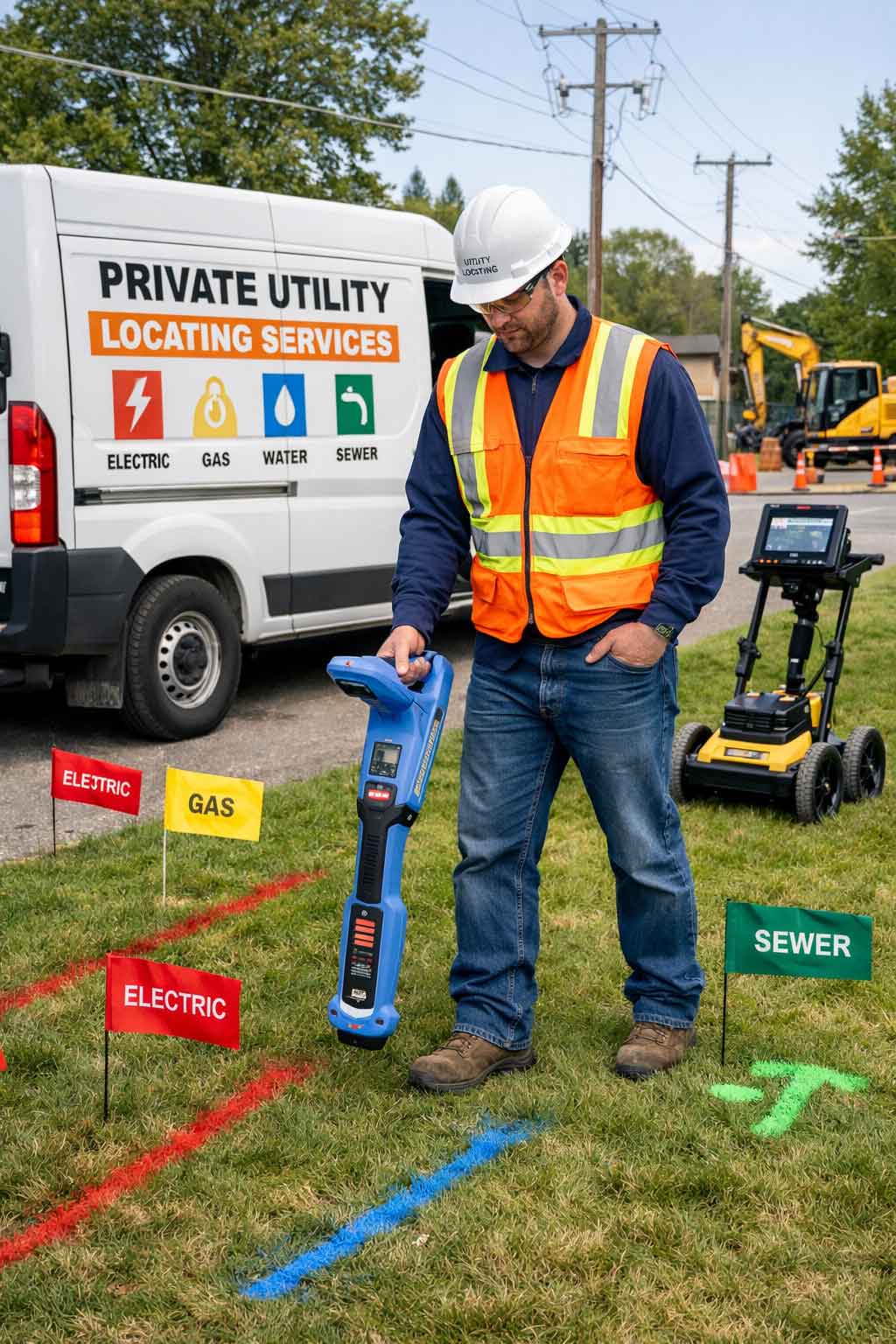
Private utility locating focuses on identifying underground lines that are not marked by public services like 811. These are typically utilities installed beyond the main connection points, including:
Power lines running from the meter to structures
Private water or irrigation systems
Sewer lines within property boundaries
Communication or low-voltage wiring
In many Montana properties—especially larger residential lots or rural spaces—these private lines are common but not always documented. That uncertainty is one of the reasons cost can vary.
The Key Factors That Influence Utility Locating Costs
Pricing isn’t random. It’s based on the time, tools, and complexity required to accurately locate underground systems. Below are the most important factors that shape the final cost.
Size of the Area Being Scanned
The larger the property, the more ground needs to be covered.
A compact residential yard in Billings may take minimal time, while acreage or commercial properties require a more detailed and time-intensive approach. More surface area means more scanning, more marking, and more verification.
Number and Type of Utilities Present
Not all utilities are equal in terms of detection.
Some lines are easier to locate because they are conductive or well-documented. Others—especially older or non-metallic lines—require more advanced techniques.
Projects involving multiple utility types naturally increase the level of effort needed, which affects cost.
Complexity of the Utility Layout
A straightforward layout with predictable utility paths is faster to map.
However, many properties in Montana have:
Unrecorded installations
Multiple additions over time
Irregular routing of lines
When utilities overlap or run in unexpected directions, technicians need more time to trace them accurately.
Ground Conditions and Surface Barriers
The condition of the ground plays a bigger role than most people expect.
Certain surfaces make locating easier, while others slow the process down:
Soft soil allows for faster detection
Rocky or compact ground requires more effort
Concrete or asphalt surfaces may limit access
In Montana, seasonal changes can also impact the ground. Frozen soil, for example, may require adjustments in approach and additional time.
Depth of the Utilities
Shallow lines are typically easier to detect than deeper ones.
When utilities are buried further underground, signals can weaken, making detection more challenging. This often requires more precise equipment and multiple passes to confirm accuracy.
Equipment and Technology Required
Different jobs call for different tools.
Basic locating may only require standard electromagnetic equipment, but more complex situations can involve:
Advanced signal tracing
Multi-frequency detection
Specialized locating techniques for unknown lines
The level of technology needed directly affects the cost because it influences both time and expertise required.
Accessibility of the Property
Easy access allows technicians to move efficiently across the site.
However, some properties present obstacles such as:
Fences or limited entry points
Landscaping features
Tight working spaces
Restricted access slows down the process and can increase the overall time needed to complete the job.
Urgency and Scheduling Needs
Timing matters.
If a project requires immediate or same-day service, pricing may reflect the need for quick scheduling and priority response. Standard scheduling, on the other hand, allows for more flexibility.
How These Factors Combine in Real Projects
Instead of looking at each factor separately, it’s more useful to understand how they interact.
For example, a small property with complex utility lines can cost more than a large property with a simple layout. Likewise, a straightforward job can become more involved if ground conditions or access issues are present.
That’s why accurate pricing usually requires at least a basic understanding of the site rather than a one-size estimate.
What Property Owners in Montana Should Expect
In Montana, especially in areas like Billings, property types vary widely—from urban residential lots to large rural parcels.
Because of this, utility locating costs are often influenced by:
Mixed infrastructure (older and newer systems combined)
Limited documentation of private lines
Changing ground conditions throughout the year
Local knowledge plays a role here. Technicians familiar with Montana properties can anticipate challenges more effectively, which leads to more accurate locating and better project planning.
How to Estimate Your Utility Locating Cost More Accurately
If you want a clearer idea of what your project might cost, focus on these details before requesting a quote:
Define the Area Clearly
Know the size and boundaries of the property that needs to be scanned.Identify Known Utilities
Share any information you already have about existing lines.Describe the Surface Conditions
Mention whether the area includes soil, concrete, gravel, or mixed surfaces.Explain the Project Scope
Let the provider know what type of digging or construction you’re planning.Set a Timeline
Indicate whether the project is scheduled in advance or requires urgent service.
Providing this information helps ensure a more accurate estimate and reduces the chance of unexpected adjustments later.
FAQs About Private Utility Locating Costs
Why is private utility locating more variable than other services?
Because every property has different conditions, layouts, and utility types, pricing depends heavily on the specific site.
Does a larger property always cost more?
Not always. A large but simple property may cost less than a smaller one with complex or hard-to-detect utilities.
Can I reduce the cost of utility locating?
Providing accurate information about your property and scheduling in advance can help streamline the process and avoid added time.
Is private utility locating necessary if I’ve called 811?
Yes, because 811 typically marks public utilities only. Private lines on your property still need to be located separately.
How accurate is utility locating?
When done professionally, it is highly accurate, but proper digging practices should still be followed after marking.
Conclusion
The cost of private utility locating services isn’t based on a single number—it’s shaped by real conditions on your property, from layout complexity to ground conditions and accessibility.
Understanding these factors makes it easier to plan your project, set realistic expectations, and avoid unnecessary risks before digging begins.
For property owners and contractors across Montana, working with experienced professionals like Last Call Locating Inc. ensures that utility locating is done with precision—helping you move forward with confidence, clarity, and fewer surprises.

OUR SERVICES

CONTACT INFORMATION
Phone:
Business Hours:
Mon - Fri: 9:00 AM – 5:00 PM
Sat & Sun: Closed
OUR LOCATION
© 2026 All Rights Reserved | Last Call Locating Inc. | Privacy Policy
Website Done By: LocalEyes