Blog
How Much Can You Save by Locating Utilities Before Digging?
The Savings Most People Don’t See Coming
When planning a digging or excavation project, most people focus on upfront costs—equipment, labor, materials. It’s easy to question anything that doesn’t directly move the project forward.
Utility locating often falls into that category. It feels like an added step. An extra expense before the real work begins.
But the real value of utility locating isn’t in what you pay—it’s in what you avoid paying later.
In Montana, where underground utility layouts can be unpredictable, the savings from locating utilities before digging can be significant, even on small projects.
Where the Biggest Savings Actually Come From
The cost savings tied to utility locating don’t come from discounts or shortcuts. They come from preventing problems that are expensive to fix.
Here are the main areas where those savings show up.
Avoiding Emergency Repair Costs
Hitting a buried utility line almost always leads to immediate repairs.
Depending on the type of line damaged, this could involve:
Electrical system repairs
Water or sewer line restoration
Communication line replacement
These repairs are rarely simple or inexpensive. They often require specialized crews, urgent response, and additional materials—all of which increase costs quickly.
Preventing Project Delays
When a utility line is damaged, work usually stops.
Crews may have to wait for repairs, inspections, or approvals before continuing. That delay can affect:
Labor scheduling
Equipment rentals
Overall project timelines
Even a short delay can add unexpected costs, especially for larger jobs in Montana where scheduling windows may already be tight.
Reducing Rework and Additional Labor
If damage occurs, the work you’ve already completed may need to be undone.
This can include:
Re-digging areas
Reinstalling materials
Adjusting layouts after repairs
That means paying twice for the same portion of the project—once to build, and again to fix.
Avoiding Liability and Damage Claims
In some cases, damaging a utility line can lead to liability issues.
This might involve:
Paying for repairs beyond your property
Covering damages to neighboring areas
Dealing with potential claims or disputes
These situations can increase costs far beyond the original scope of the project.
A Practical Comparison of Costs
To understand the savings more clearly, it helps to compare two real-world scenarios.
Without Utility Locating
Unknown underground conditions
Higher risk of hitting utilities
Potential for repairs, delays, and rework
With Utility Locating
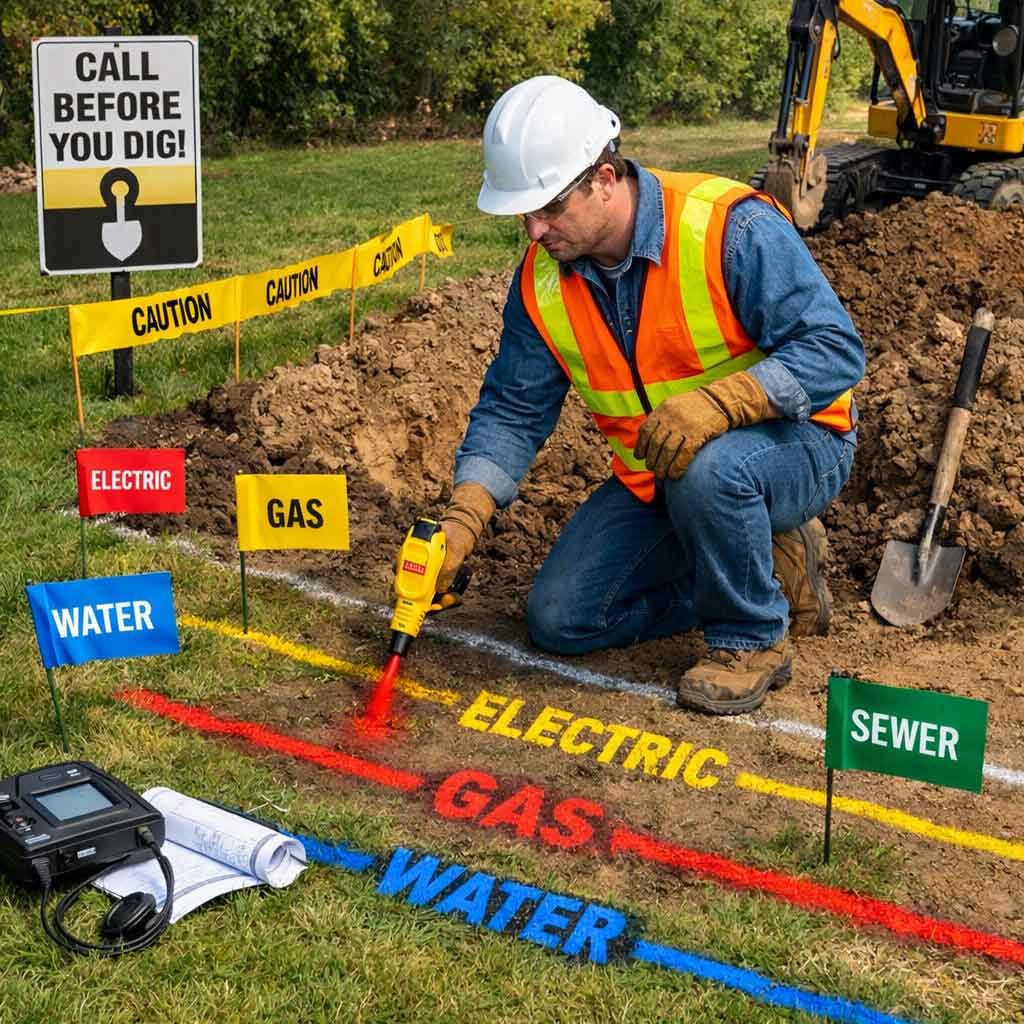
Clear marking of underground lines
Reduced risk during excavation
Smoother workflow with fewer interruptions
The difference isn’t just financial—it’s operational. One approach introduces uncertainty, while the other reduces it.
How Savings Add Up Over Time
Utility locating isn’t just about avoiding one mistake. It’s about creating consistency across projects.
For contractors and property owners in Montana, repeated projects without proper locating increase the chance of costly incidents over time.
By consistently locating utilities before digging, you:
Reduce the likelihood of repeated damage
Maintain more predictable project costs
Improve efficiency across multiple jobs
This is especially important in areas like Billings, where both residential and commercial projects continue to grow.
Montana-Specific Factors That Increase Potential Savings
The value of utility locating becomes even clearer when you consider local conditions.
Mixed Infrastructure
Many properties have a combination of older and newer utility systems, which can be difficult to trace without proper equipment.
Rural Property Layouts
Private utility lines are more common and often undocumented, increasing the risk of accidental damage.
Seasonal Challenges
In colder months, frozen ground can make repairs more difficult and expensive if damage occurs.
These factors increase both the likelihood of hitting a utility and the cost of fixing it—making prevention even more valuable.
When Utility Locating Saves the Most Money
While it’s beneficial for nearly any project, there are situations where the savings are even more noticeable.
Larger Excavation Projects
The more extensive the digging, the greater the chance of encountering multiple utility lines.
Projects Near Structures or Existing Systems
Work near homes, buildings, or existing infrastructure increases the risk of damaging critical lines.
Properties With Unknown Utility Layouts
If you’re unsure where utilities are located, the risk of guessing incorrectly is high.
Time-Sensitive Projects
Delays can be just as costly as repairs, especially when deadlines are involved.
The Cost of “Taking the Risk”
Some property owners consider skipping utility locating to save money upfront.
But that decision shifts the risk entirely onto the project.
Instead of paying a predictable, controlled cost, you’re exposing yourself to:
Unpredictable repair expenses
Unplanned delays
Potential safety hazards
In most cases, the question isn’t whether damage will happen—it’s whether you’re prepared for the consequences if it does.
How Utility Locating Improves Overall Efficiency
Beyond cost savings, utility locating also improves how smoothly a project runs.
With accurate markings in place, you can:
Plan excavation paths more effectively
Avoid stopping and reassessing mid-project
Keep crews working without interruptions
This efficiency translates into time savings, which often leads to additional cost savings as well.
FAQs About Saving Money with Utility Locating
How much can utility locating actually save?
Savings vary by project, but avoiding even a single utility strike can prevent thousands of dollars in repair and delay costs.
Is utility locating necessary for small digging jobs?
Yes. Even minor projects can hit underground lines, making locating a cost-effective precaution.
Does utility locating eliminate all risk?
It significantly reduces risk, but proper digging practices should still be followed after marking.
Can utility locating speed up my project?
Yes. Knowing where utilities are located helps avoid interruptions and keeps work moving efficiently.
Why is utility locating especially important in Montana?
Because of mixed infrastructure, rural properties, and changing ground conditions, underground utilities can be harder to predict.
Conclusion
Utility locating doesn’t just protect your project—it protects your budget.
In Montana, where underground conditions can vary and utility layouts aren’t always obvious, the savings from locating utilities before digging can be substantial.
Instead of dealing with unexpected repairs, delays, or rework, you gain clarity and control from the start.
For property owners and contractors preparing to dig, working with experienced professionals like Last Call Locating Inc. helps ensure that every project begins with accurate information—making it easier to stay on schedule, avoid costly mistakes, and move forward with confidence.

OUR SERVICES

CONTACT INFORMATION
Phone:
Business Hours:
Mon - Fri: 9:00 AM – 5:00 PM
Sat & Sun: Closed
OUR LOCATION
© 2026 All Rights Reserved | Last Call Locating Inc. | Privacy Policy
Website Done By: LocalEyes